

Zopiclone Side Effects

In 30 seconds…
Zopiclone is a sleeping tablet used to treat insomnia — but many people don’t realize how serious its side effects can be if misused. This medication may cause short-term effects like dry mouth, daytime drowsiness, and metallic taste, but it can also trigger deeper problems like anxiety, dependency, coordination issues, memory troubles, and even weight changes in some users.
Introduction
If you’ve been prescribed zopiclone for sleep problems, you’re probably wondering what side effects you might experience. It’s a valid concern — understanding how any medication affects your body helps you use it safely and know when something doesn’t feel right.
Zopiclone is a commonly prescribed sleeping pill that helps millions of people get the rest they desperately need. But like any medication, it comes with potential side effects that range from mild and temporary to more serious concerns that require medical attention.
In this guide, we’ll walk through everything you need to know about zopiclone side effects. We’ll cover the common ones you might notice right away, the serious risks associated with long-term use, and specific concerns like anxiety and weight changes that some users experience. You’ll also learn who should avoid this medication, how to use it more safely, and when it’s time to call your doctor. By the end, you’ll have a clear, complete picture of what to expect and how to protect your health while using zopiclone.
What Is Zopiclone & Why Is It Prescribed?
Zopiclone is a prescription sedative medication primarily used to treat insomnia and other sleep disorders. If you’ve been lying awake night after night, unable to fall asleep or stay asleep, your doctor might recommend zopiclone as a short-term solution.
This medication belongs to a class of drugs called non-benzodiazepine hypnotics, sometimes referred to as “Z-drugs.” It works by affecting certain chemicals in your brain — specifically, it enhances the activity of GABA, a neurotransmitter that has a calming effect on your nervous system. Think of it as turning down the volume on your brain’s activity, making it easier for you to drift off to sleep.
Doctors typically prescribe zopiclone for short periods, usually just a few weeks. It’s meant to help reset your sleep pattern when insomnia becomes disruptive to your daily life. The medication usually starts working within an hour of taking it, helping you fall asleep faster and reducing the number of times you wake up during the night.
While zopiclone can be highly effective for treating sleep problems, it’s not intended as a permanent solution. Your doctor will want to address the underlying causes of your insomnia alongside prescribing this medication. Understanding its purpose helps you use it responsibly and recognize when side effects might signal a problem.
Common Zopiclone Side Effects
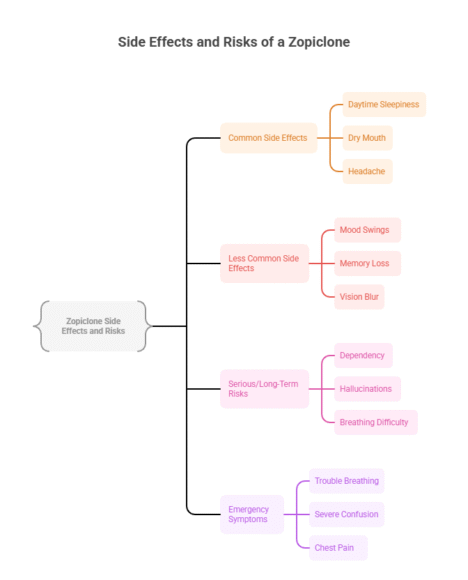
Most people who take zopiclone will experience at least one or two mild side effects, especially when they first start the medication. The good news is that these common zopiclone side effects are usually temporary and manageable.
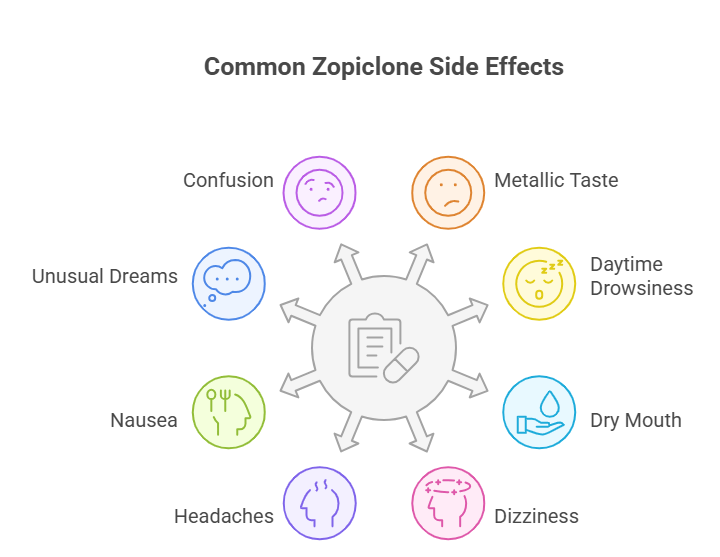
Metallic or bitter taste is probably the most frequently reported side effect. Many users describe waking up with an unpleasant taste in their mouth that can linger throughout the morning. Some people find that brushing their teeth or chewing sugar-free gum helps reduce this sensation.
Daytime drowsiness is another common complaint. You might feel groggy, sluggish, or unusually tired the next day, especially if you didn’t get a full seven to eight hours of sleep after taking the medication. This grogginess can affect your concentration and reaction time.
Dry mouth is frequently reported. You may wake up feeling parched or notice your mouth feels uncomfortably dry throughout the day. Keeping water nearby and staying well-hydrated can help manage this symptom.
Dizziness or lightheadedness can occur, particularly when you first stand up. This happens because zopiclone relaxes your body, including your blood vessels, which can temporarily affect your balance.
Other common side effects include mild headaches, feeling slightly nauseous, or experiencing unusual dreams. Some people report feeling a bit confused or disoriented if they wake up during the night while the medication is still active in their system.
These everyday side effects typically diminish as your body adjusts to the medication. However, if they persist or become bothersome, it’s worth discussing with your doctor whether the dosage needs adjustment or if zopiclone is the right choice for you.
Serious & Long-Term Side Effects
While many zopiclone side effects are mild, there are more serious risks you need to be aware of, especially if you use the medication for extended periods or at higher doses than prescribed.
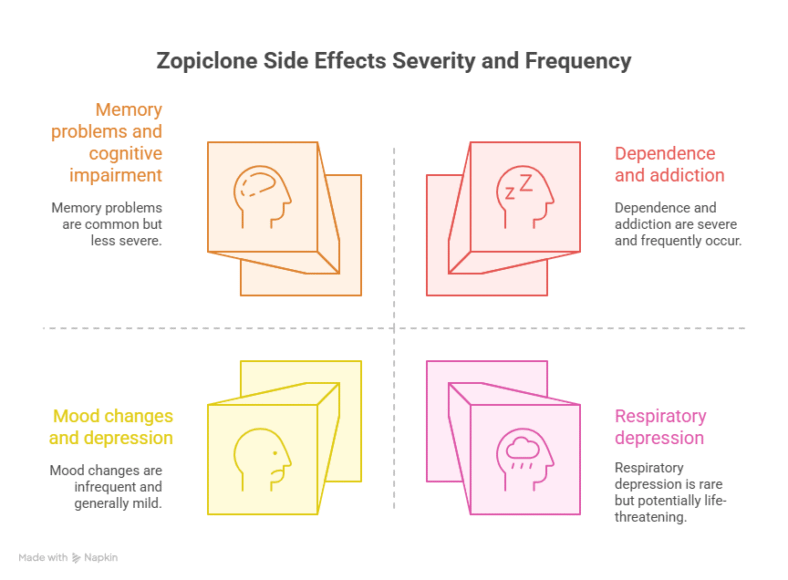
Dependence and addiction are significant concerns. Zopiclone was designed for short-term use because your body can become physically dependent on it within just a few weeks. When this happens, you might find it impossible to sleep without the medication, and stopping suddenly can trigger withdrawal symptoms like rebound insomnia, anxiety, tremors, and sweating. Some people develop a psychological dependency, feeling they cannot function without the drug.
Memory problems and cognitive impairment can develop with regular use. You might experience difficulty forming new memories, especially regarding events that happen shortly after taking the medication. Some users report episodes of amnesia where they don’t remember conversations or activities from the previous evening.
Coordination and balance issues become more pronounced with long-term use. You’re at increased risk of falls, which is particularly dangerous for older adults. Your reaction times may slow significantly, making tasks like driving or operating machinery hazardous even the next day.
Complex sleep behaviors are rare but serious. Some people have reported sleepwalking, sleep-driving, preparing and eating food, or making phone calls while not fully awake — with no memory of these activities afterward. These behaviors can be dangerous and require immediate medical attention.
Mood changes and depression can occur in some users. While insomnia itself can affect mood, zopiclone may worsen or trigger feelings of depression, unusual thoughts, or behavioral changes in susceptible individuals.
Respiratory depression is a potentially life-threatening side effect, especially if you have underlying breathing conditions or combine zopiclone with other sedatives or alcohol. Your breathing may become dangerously slow or shallow.
If you’ve been taking zopiclone for more than a few weeks, never stop abruptly without medical supervision. Your doctor can help you taper off gradually to minimize withdrawal symptoms and ensure your safety.
Zopiclone Side Effects Anxiety
It might seem contradictory, but zopiclone side effects anxiety is a real concern that affects some users. Even though zopiclone is meant to calm your nervous system and promote sleep, it can paradoxically trigger or worsen anxiety in certain situations.
Rebound anxiety is one of the most common forms. This happens when you reduce your dose or stop taking zopiclone after regular use. Your brain has become accustomed to the medication’s calming effects, and when it’s suddenly absent, your nervous system can overcompensate. You might feel more anxious than you did before starting the medication, experience panic symptoms, or feel on edge for no apparent reason.
Next-day anxiety can occur even during regular use. Some people wake up feeling inexplicably nervous, restless, or worried. This might be related to the medication’s effects wearing off or disruptions to your natural sleep architecture. Quality sleep involves cycling through different sleep stages, and zopiclone can alter these patterns in ways that leave you feeling emotionally unsettled.
Paradoxical reactions are rare but documented. In some individuals, particularly the elderly or those with certain mental health conditions, zopiclone can cause the opposite of its intended effect. Instead of feeling calm, you might experience agitation, irritability, aggressive behavior, or increased anxiety.
If you notice zopiclone side effects, anxiety developing, don’t ignore it. Document when the anxiety occurs — is it during treatment, when reducing your dose, or after stopping? This information helps your doctor understand what’s happening and adjust your treatment accordingly. Sometimes switching medications, adjusting the dosage, or implementing non-drug therapies for both sleep and anxiety can provide better results.
Never suffer through severe anxiety symptoms alone. Mental health changes should always be discussed with your healthcare provider, especially when they coincide with medication use.
Available Strength
- Zopiclone 3.75 mg | Eszop 3 mg
- Zopiclone 7.5 mg | Zopisign 7.5 mg
- Zopiclone 10 mg | Zopisign 10 mg
- Zopiclone 20 mg | Zopimaxx 20 mg
- Zopiclone 25 mg | Zopimaxx 25 mg
Zopiclone Side Effects Weight Gain
Weight changes aren’t among the most common zopiclone side effects, but zopiclone side effects weight gain, is a concern some users experience. The connection isn’t always straightforward, but several mechanisms might explain why some people gain weight while taking this medication.
Disrupted sleep architecture can affect metabolism. While zopiclone helps you fall asleep, it may not provide the same quality of restorative sleep your body needs for optimal metabolic function. Poor sleep quality is linked to hormonal changes that increase appetite and cravings, particularly for high-calorie, carbohydrate-rich foods.
Increased appetite has been reported by some users. The medication may influence neurotransmitters that regulate hunger signals, making you feel hungrier than usual. Some people report midnight snacking episodes they barely remember — those complex sleep behaviors mentioned earlier can include preparing and eating food while not fully conscious.
Reduced physical activity often accompanies sleep medication use. If you’re experiencing daytime drowsiness or fatigue, you’re naturally less inclined to exercise or stay active. This decrease in energy expenditure can contribute to gradual weight gain over time.
Fluid retention is another possibility, though less common. Some users report feeling bloated or notice swelling, which can translate to numbers on the scale even if actual fat gain isn’t occurring.
It’s worth noting that weight changes during zopiclone treatment might not be directly caused by the medication itself. Insomnia and the conditions that cause it — stress, depression, anxiety — are independently associated with weight fluctuations. Improving your sleep might actually help regulate your weight in some cases.
If you notice significant weight changes while taking zopiclone, track your eating habits, activity levels, and overall well-being. Discuss these observations with your doctor to determine whether the medication is contributing and whether adjustments are needed.
Imovane Zopiclone Side Effects
You might have heard of Imovane and wondered if Imovane zopiclone side effects differ from regular zopiclone. Here’s the straightforward answer: they don’t. Imovane is simply a brand name for zopiclone, just as Kleenex is a brand name for facial tissue.
Whether your prescription bottle says “zopiclone,” “Imovane,” or another brand name like “Zimovane,” you’re taking the same active ingredient. The medication works identically, and the side effect profile is exactly the same. The dosage strengths available — typically 3.75mg and 7.5mg tablets — are also standard across brands.
The confusion often arises because different countries and manufacturers use different brand names for the same medication. In some regions, Imovane is the most commonly recognized name, while in others, generic zopiclone is more prevalent. Some people also wonder if generic versions have different side effects than brand-name versions, but this isn’t the case. Generic medications contain the same active ingredient in the same strength and must meet the same quality standards.
The only differences you might notice between brands are inactive ingredients — the fillers, binders, and coatings used to form the tablet. In rare cases, someone might have a sensitivity to a specific inactive ingredient in one formulation but not another. However, the core effects and side effects of the active ingredient, zopiclone, remain consistent regardless of the brand name on the package.
So whether you’re researching Imovane zopiclone side effects or generic zopiclone side effects, the information applies equally. Focus on understanding the medication itself rather than worrying about brand-specific differences that don’t exist.
How Long Do Zopiclone Side Effects Last
One of the most common questions people ask is how long zopiclone side effects will stick around. The answer depends on which side effects you’re experiencing and several individual factors.
Short-term side effects like the metallic taste, dry mouth, or morning grogginess typically last several hours after taking the medication. Most people notice these effects primarily during the first few hours after waking up. The medication’s half-life — the time it takes for half the drug to leave your system — is approximately five hours in healthy adults. This means most of the medication clears your body within 24 hours.
However, if you’re experiencing daytime drowsiness, it might persist longer than expected. Older adults, people with liver problems, or those taking higher doses may metabolize zopiclone more slowly, leading to prolonged effects that can last into the afternoon or even the entire next day.
Tolerance-related effects like reduced effectiveness can develop within weeks of regular use. Conversely, if you experience zopiclone side effects, anxiety, or rebound insomnia after stopping, these symptoms typically peak within a few days and gradually improve over one to two weeks. In some cases, particularly with prolonged use or higher doses, withdrawal symptoms can persist longer.
Long-term cognitive effects are more concerning. Memory issues, coordination problems, or mood changes that develop during extended use might take weeks or even months to fully resolve after discontinuing the medication. Research suggests that most cognitive effects do improve over time once the medication is stopped, but recovery varies by individual.
Your age, overall health, liver function, dosage, and duration of use all influence how long side effects persist. Younger, healthier individuals typically clear the medication faster and recover more quickly from side effects than older adults or those with health complications.
Who Should Avoid Zopiclone?
Zopiclone isn’t safe for everyone. Certain groups of people face higher risks of serious side effects and should either avoid this medication entirely or use it only under very close medical supervision.
Older adults are particularly vulnerable to zopiclone side effects. They metabolize the medication more slowly, leading to prolonged drowsiness, increased fall risk, confusion, and greater potential for memory problems. If prescribed to seniors, doctors typically recommend lower doses.
People with liver problems should be cautious. Your liver processes zopiclone, and if it’s not functioning properly, the medication can accumulate in your system, intensifying side effects and increasing risks of toxicity.
Individuals with sleep apnea or respiratory disorders face serious risks. Zopiclone can further suppress breathing, potentially leading to dangerous oxygen deprivation during sleep. If you snore heavily, wake up gasping, or have been diagnosed with any breathing disorder, inform your doctor before considering this medication.
Those with a history of substance abuse or addiction should generally avoid zopiclone due to its dependency potential. If you’ve struggled with alcohol or drug dependence, you’re at higher risk of developing problematic use patterns with sedative medications.
Pregnant or breastfeeding women should not take zopiclone unless absolutely necessary. The medication can cross the placenta and appear in breast milk, potentially affecting the baby. Always discuss safer alternatives with your healthcare provider if you’re pregnant, planning to become pregnant, or nursing.
People with myasthenia gravis, a condition causing muscle weakness, may experience worsened symptoms with zopiclone. The medication’s muscle-relaxing effects can exacerbate this condition.
Those with mental health conditions like severe depression or suicidal thoughts require careful monitoring. Zopiclone can sometimes worsen mood disorders or trigger unusual behavioral changes.
Always provide your doctor with a complete medical history before starting zopiclone to ensure it’s safe for your specific situation.
What To Do If Side Effects Feel Severe?
Recognizing when zopiclone side effects cross the line from bothersome to dangerous is crucial for your safety. While mild effects like a bitter taste or slight drowsiness are expected, certain symptoms require immediate medical attention.
Seek emergency help immediately if you experience difficulty breathing, severe chest pain, irregular heartbeat, or feel like you might pass out. These could indicate a serious allergic reaction or dangerous respiratory depression.
Contact your doctor right away if you notice severe confusion, hallucinations (seeing or hearing things that aren’t there), unusual thoughts about hurting yourself, or significant personality changes. Memory blackouts where you’ve engaged in activities with no recollection — especially dangerous behaviors like driving — also warrant urgent medical consultation.
Don’t ignore severe dizziness that prevents you from standing safely, extreme daytime drowsiness that interferes with normal activities, or worsening depression and anxiety. Signs of an allergic reaction, like rash, itching, swelling of your face or throat, or difficulty swallowing, also require prompt attention.
If side effects feel unbearable but aren’t life-threatening, schedule an appointment with your doctor as soon as possible. Never simply stop taking zopiclone abruptly after regular use, as this can trigger withdrawal symptoms. Your doctor can help you taper off safely or switch to an alternative treatment.
Keep a symptom diary noting when side effects occur, their severity, and any patterns you notice. This information helps your healthcare provider make informed decisions about adjusting your treatment. Remember, your doctor prescribed zopiclone to help you, not harm you — they want to know if it’s not working as intended.
Safer Use Tips To Reduce Side Effects
While you can’t eliminate zopiclone side effects entirely, you can take steps to minimize your risks and use the medication more safely.
Never combine zopiclone with alcohol. This combination dramatically increases sedation, impairs judgment, slows breathing, and raises the risk of dangerous behaviors you won’t remember. Even a single drink can be hazardous.
Avoid driving or operating machinery for at least 12 hours after taking zopiclone, even if you feel alert. Studies show that reaction times and decision-making can remain impaired long after you feel the drowsiness has passed. Plan your schedule accordingly.
Take zopiclone only when you can dedicate seven to eight hours to sleep. If you have less time, you’re more likely to wake up feeling groggy and impaired. Don’t take it if you need to wake up early or have important activities the next morning.
Don’t combine with other sedatives or sleep aids unless your doctor explicitly approves. This includes over-the-counter antihistamines, certain pain medications, muscle relaxants, and anxiety medications. The combined effects can be dangerous.
Practice good sleep hygiene alongside medication use. Keep your bedroom cool and dark, maintain consistent sleep and wake times, limit screen time before bed, and avoid caffeine in the evening. These habits help you achieve better sleep quality and may allow you to use lower doses or discontinue zopiclone sooner.
Follow your prescribed dosage exactly. Taking more than recommended doesn’t produce better sleep — it just increases side effects and dependency risks. Similarly, don’t take zopiclone more frequently than prescribed.
Inform all your healthcare providers that you’re taking zopiclone. This includes dentists, emergency room doctors, and specialists who might prescribe other medications.
Using these strategies helps you benefit from zopiclone’s sleep-promoting effects while protecting yourself from unnecessary risks.
When To See A Doctor
Certain symptoms and situations require professional medical evaluation beyond your regular follow-ups. Knowing when to seek help ensures you stay safe while using zopiclone.
Schedule an urgent appointment if you experience severe or persistent side effects that interfere with your daily life, develop signs of dependence (feeling unable to sleep without the medication, taking more than prescribed, or experiencing withdrawal symptoms when you miss a dose), or notice mood changes like increased depression, anxiety, or thoughts about self-harm.
Contact your doctor if zopiclone stops working effectively after a few weeks, you find yourself needing higher doses to achieve the same effect, or you’ve been taking it longer than the originally intended short-term period and don’t know how to stop safely.
Seek immediate medical attention for signs of allergic reactions, complex sleep behaviors (like sleep-driving or sleep-eating), severe confusion or hallucinations, difficulty breathing or chest pain, or if someone observes that your breathing becomes very slow or you’re difficult to wake up.
Regular follow-ups are essential even if everything seems fine. Your doctor should monitor your progress, assess whether you still need the medication, and help you develop a plan for discontinuing it when appropriate. Sleep medications work best as temporary solutions while addressing the underlying causes of insomnia.
Never feel embarrassed or hesitant about reporting concerns. Your doctor has heard it all before and would much rather address a problem early than deal with serious complications later.
Conclusion
Understanding zopiclone side effects empowers you to use this medication safely and recognize when something isn’t right. While zopiclone can be an effective short-term solution for insomnia, it’s not without risks. The common side effects, like bitter taste and morning grogginess, are usually manageable, but the potential for dependence, cognitive impairment, and serious reactions requires caution and respect.
Pay attention to your body’s signals, especially concerns like zopiclone side effects, anxiety, or unexpected weight gain. Remember that brand names like Imovane contain the same active ingredient with identical risks. Use zopiclone exactly as prescribed, avoid dangerous combinations with alcohol or other sedatives, and maintain open communication with your healthcare provider about your experience.
Most importantly, view zopiclone as one tool among many for improving your sleep. Combining it with good sleep hygiene practices and addressing underlying causes of insomnia leads to better long-term outcomes than medication alone.
FAQs
Are zopiclone side effects permanent?
Most zopiclone side effects are temporary and resolve after discontinuing the medication. Common effects like metallic taste and drowsiness typically clear within a day or two of stopping. However, if you’ve taken zopiclone for extended periods, cognitive effects like memory issues may take weeks or months to fully improve. Dependency and withdrawal symptoms can also persist temporarily but generally resolve with proper medical supervision during tapering.
Does zopiclone cause anxiety?
Yes, zopiclone can trigger or worsen anxiety in some users. This is often “rebound anxiety” that occurs when reducing the dose or stopping the medication after regular use. Some people also experience paradoxical reactions where they feel more anxious instead of calm. If you notice increased anxiety while taking zopiclone, discuss this with your doctor rather than continuing to suffer in silence.
Can zopiclone cause weight gain?
Weight gain isn’t a common side effect, but some users do experience it. Possible reasons include disrupted sleep quality affecting metabolism, increased appetite or late-night eating episodes, reduced physical activity due to daytime fatigue, or fluid retention. If you notice significant weight changes while taking zopiclone, track your eating and activity patterns and discuss your concerns with your healthcare provider.
Is zopiclone safe for long-term use?
No, zopiclone is not intended for long-term use. It’s designed as a short-term treatment, typically for just a few weeks. Extended use increases risks of dependency, tolerance, cognitive impairment, and other serious side effects. If your sleep problems persist beyond a few weeks, your doctor should investigate underlying causes and consider alternative treatments rather than continuing zopiclone indefinitely.
Can I drink alcohol with zopiclone?
Absolutely not. Combining zopiclone with alcohol is dangerous. Both substances depress your central nervous system, and together they dramatically increase sedation, impair judgment and coordination, slow breathing to potentially dangerous levels, and increase the risk of complex sleep behaviors you won’t remember. Even small amounts of alcohol can cause serious interactions. Always avoid alcohol entirely when taking zopiclone.
References
Board-Certified Family Medicine Physician | HIV Specialist™ (AAHIVS) | Public Health Advocate
Dr. Avi Varma is a board-certified family medicine physician and HIV Specialist™ with over 10 years of experience in primary care, infectious disease management, and community health. Based in Atlanta, Georgia, she works with a nonprofit organization dedicated to ending the HIV epidemic. Dr. Varma holds a Master’s in Public Health from Johns Hopkins University and is a Fellow of the American Academy of Family Physicians. She is deeply committed to advancing equitable healthcare and improving outcomes for underserved populations.