Blog

Can You Get Erectile Dysfunction at 15?

In 30 seconds…
You might be wondering, can you get erectile dysfunction at 15? While ED is usually linked to older men, teenagers can experience it too. At this age, it’s often not a permanent problem but may be caused by stress, anxiety, lifestyle habits, or even medical issues. The good news is, in most cases, it can be improved with healthy routines, reducing stress, and talking to a doctor if it continues. Remember—having erection difficulties as a teen doesn’t mean you’ll face it forever.
Introduction
When Jake* first experienced erectile dysfunction at 15, he thought he was broken. The confusion, shame, and fear that followed made him withdraw from dating entirely. What Jake didn’t know – and what most teens don’t realize – is that erectile dysfunction during adolescence is far more common than anyone talks about.
(*Name changed for privacy)
The uncomfortable truth is that erectile dysfunction doesn’t discriminate by age. While society tends to associate ED with middle-aged and older men, the reality is starkly different. Research reveals that between 8% and 15% of teenage males experience some form of erectile dysfunction, yet this remains one of the most under-discussed aspects of adolescent health.
Understanding erectile dysfunction at 15 isn’t just about addressing a physical concern – it’s about recognizing how this condition can shape a young man’s entire relationship with sexuality, self-confidence, and intimate relationships for years to come.
The Hidden Reality of Teenage Erectile Dysfunction
Dr. Sarah Mitchell, an adolescent medicine specialist at Boston Children’s Hospital, has seen a significant increase in teen ED cases over the past decade. “What surprises most parents and even some healthcare providers is just how common this really is,” she explains. “We’re seeing boys as young as 14 coming in with these concerns, and the psychological impact can be devastating if not addressed properly.”
The numbers paint a clearer picture than most people realize. A comprehensive study published in the Journal of Sexual Medicine found that among males aged 16-21, nearly one in seven reported experiencing erectile difficulties. More concerning, however, is that only about 30% of these young men sought any form of help, leaving the majority to struggle in silence.
What makes teenage erectile dysfunction particularly challenging is the perfect storm of factors that contribute to it. Unlike older men, where ED often stems from clear physical causes like diabetes, heart disease, or medication side effects, teenage ED exists in a complex web of psychological, social, and developmental factors.
Consider the typical 15-year-old male: his body is flooded with fluctuating hormones, his brain is still developing crucial areas responsible for emotional regulation and decision-making, and he’s navigating intense social pressures around sexuality and performance. Add to this mix the unprecedented access to pornography, social media pressures, academic stress, and often unrealistic expectations about sexual performance, and it becomes clear why so many young men struggle.
Understanding the Teenage Mind and Body Connection
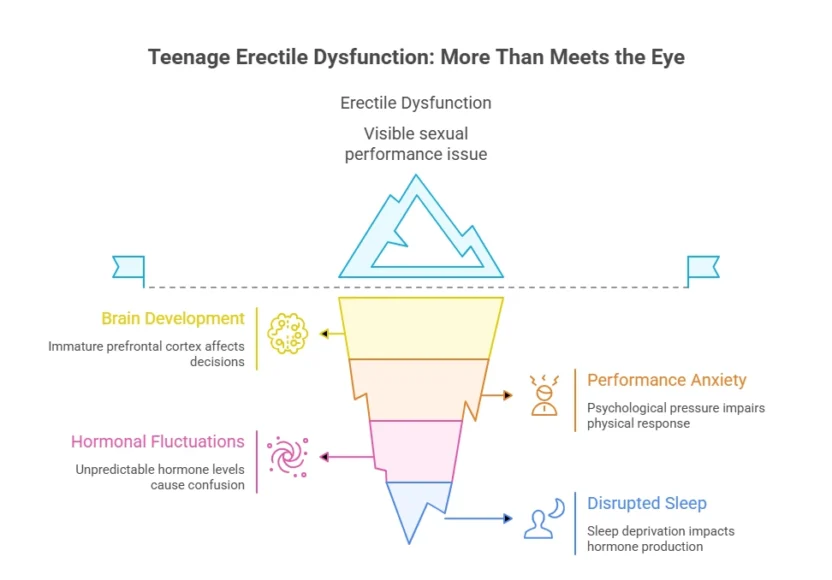
To truly understand erectile dysfunction at 15, we need to appreciate the intricate relationship between the adolescent mind and body. The teenage brain is essentially under construction, with the prefrontal cortex – responsible for decision-making, impulse control, and emotional regulation – not fully developed until the mid-twenties.
This developmental reality means that teens experience stress, anxiety, and pressure more intensely than adults. When a 15-year-old worries about sexual performance, that anxiety doesn’t just create mild nervousness – it can trigger a full cascade of physiological responses that directly interfere with sexual function.
Dr. James Peterson, a clinical psychologist specializing in adolescent sexuality, describes it this way: “Imagine trying to perform any complex physical task while someone is shouting criticisms in your ear. That’s essentially what happens when performance anxiety takes hold in a teenager’s mind. The body simply cannot respond normally under that kind of psychological pressure.”
The hormonal landscape of adolescence adds another layer of complexity. While testosterone levels generally increase during puberty, they don’t rise in a steady, predictable pattern. Instead, hormone levels can fluctuate dramatically from day to day, week to week. These natural fluctuations can temporarily affect sexual function, creating confusion and worry that can spiral into more persistent problems.
Sleep patterns, which are naturally disrupted during adolescence due to circadian rhythm changes, further complicate the picture. Most teenagers are chronically sleep-deprived, getting nowhere near the 8-9 hours they need for optimal hormone production and stress management. This sleep deficit directly impacts sexual function while simultaneously reducing the body’s ability to cope with stress and anxiety.
The Psychology Behind Performance Anxiety
Performance anxiety in teenagers operates differently than in adults, often with more intensity and longer-lasting effects when a 15-year-old experiences their first episode of erectile difficulty – which might be completely normal and temporary – their interpretation of that event can set the stage for ongoing problems.
The teenage tendency toward black-and-white thinking means that one episode of ED often becomes internalized as “I’m broken” or “I’m not a real man.” These catastrophic interpretations create a self-fulfilling prophecy where the fear of ED actually causes ED, creating a cycle that can persist for months or even years without intervention.
Social media and peer pressure amplify these concerns exponentially. Teens today are bombarded with unrealistic portrayals of sexuality and masculinity, often comparing their real experiences to highly edited, unrealistic standards. The pressure to be sexually confident and capable at increasingly younger ages creates an environment where any deviation from perceived “normal” performance becomes a source of intense shame and anxiety.
The role of pornography in teen ED cannot be understated. A growing body of research suggests that excessive pornography use during formative years can contribute to erectile dysfunction through multiple mechanisms. Pornography often presents unrealistic scenarios, body types, and performance expectations that can create anxiety when real-life experiences don’t match these fictional portrayals.
More concerning is emerging research on “porn-induced erectile dysfunction” (PIED), where heavy pornography use may actually rewire the brain’s reward pathways, making it difficult to become aroused by real-life partners and situations. While this remains an area of ongoing research, clinicians are increasingly seeing young men whose ED improves significantly when they reduce or eliminate pornography use.
Physical Factors That Influence Teen ED
While psychological factors dominate teenage ED cases, physical factors play an important supporting role that shouldn’t be overlooked. The modern teenage lifestyle often creates a perfect storm of physical conditions that can contribute to erectile dysfunction.
Obesity rates among teenagers have tripled over the past three decades, and excess weight significantly impacts sexual function. Obesity affects circulation, hormone production, and self-confidence – all crucial factors in sexual performance. Studies show that obese teenagers are 2.5 times more likely to experience erectile difficulties compared to their peers with healthy weights.
The relationship between obesity and ED in teens is particularly insidious because it creates multiple interconnected problems. Excess weight can reduce testosterone production while increasing estrogen levels. It impairs circulation, making it more difficult for blood to flow to the penis during arousal. Perhaps most importantly, obesity often severely impacts self-image and confidence, creating psychological barriers to sexual function.
Cardiovascular fitness plays a crucial role in sexual function that many teenagers don’t realize. The same blood flow that’s essential for heart health is equally important for erectile function. Sedentary lifestyles, poor dietary habits, and lack of regular exercise all contribute to reduced cardiovascular fitness and, consequently, increased risk of ED.
Sleep disorders, particularly sleep apnea, are increasingly recognized as contributors to ED in young men. Sleep apnea disrupts the deep sleep phases crucial for testosterone production and stress hormone regulation. Many teens with undiagnosed sleep apnea experience fatigue, mood problems, and yes, sexual dysfunction.
Substance use presents another significant physical risk factor. Alcohol, even in moderate amounts, can impair sexual function. Marijuana use, increasingly common among teenagers, has complex effects on sexual function – while some users report increased arousal, regular use can actually impair erectile function over time. More dangerous substances like stimulants or depressants can have severe and sometimes lasting impacts on sexual function.
The Cascade Effect of Untreated Teen ED
When erectile dysfunction goes untreated in teenagers, it rarely remains an isolated problem. Instead, it tends to create a cascade of psychological and social effects that can impact multiple areas of a young person’s life.
The first casualty is often self-esteem. Teenagers are already navigating complex questions about their identity, worth, and place in the world. When sexual function becomes a source of shame and anxiety, it can undermine confidence in ways that extend far beyond the bedroom.
Academic performance frequently suffers when teens are dealing with untreated ED. The constant worry, sleep disruption from anxiety, and general stress can make it difficult to concentrate on schoolwork. Some teens become so preoccupied with their concerns that their grades begin to slip, creating additional stress that further exacerbates the problem.
Social relationships often bear the brunt of untreated ED as well. Many teens begin avoiding dating or social situations where romantic encounters might arise. This avoidance can lead to social isolation at a crucial developmental period when peer relationships and social learning are essential for healthy development.
The impact on future relationships can be particularly profound. Teens who don’t receive appropriate help for ED often carry anxiety and negative sexual attitudes into their adult relationships. They may avoid intimacy, struggle with communication about sexual needs, or develop persistent performance anxiety that continues long after the original physical issues have resolved.
Perhaps most concerning is the potential for untreated teen ED to contribute to more serious mental health issues. Depression and anxiety disorders are already more common during adolescence, and the added stress of sexual dysfunction can tip vulnerable teens toward more serious psychological problems.
Modern Treatment Approaches That Actually Work
The good news is that treatment for teenage ED has evolved significantly over the past decade, with approaches specifically tailored to the unique needs and circumstances of adolescents. The most effective treatments recognize that teen ED is rarely just a physical problem requiring a physical solution.
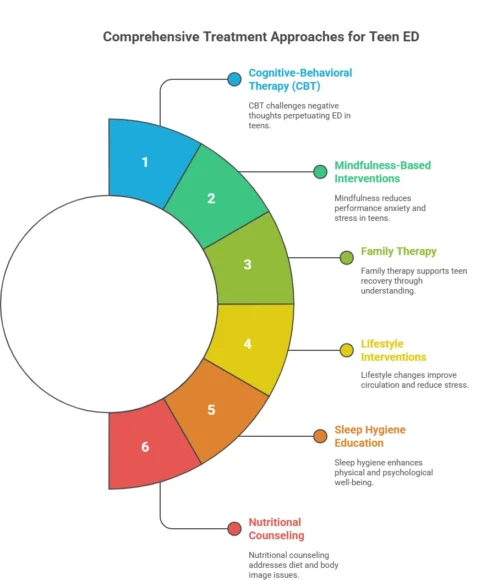
Cognitive-behavioral therapy (CBT) has emerged as the gold standard for treating teen ED. CBT helps teenagers identify and challenge the negative thought patterns that often perpetuate erectile dysfunction. Rather than simply telling teens to “relax,” CBT provides concrete tools for managing anxiety, reframing catastrophic thoughts, and developing realistic expectations about sexual performance.
Dr. Lisa Chen, a sex therapist who specializes in adolescent cases, describes her approach: “We work on helping teens understand that sexuality is a learned skill, not an innate talent. Just like learning to drive or play an instrument, it takes practice, patience, and the right kind of guidance. Most importantly, occasional difficulties are completely normal and don’t reflect on their worth as a person.”
Mindfulness-based interventions are increasingly showing promise for teen ED. These approaches help young men develop present-moment awareness and reduce the tendency to get caught up in performance-focused thoughts during intimate moments. Mindfulness techniques also help with general stress management, addressing one of the root causes of psychological ED.
Family therapy often plays a crucial role, though it requires careful navigation of boundaries and privacy concerns. The goal isn’t to involve parents in intimate details but rather to ensure that the family environment supports the teen’s recovery. This might involve helping parents understand the condition, reducing performance pressures, and creating a supportive home environment.
Lifestyle interventions form the foundation of most successful teen ED treatment plans. Regular cardiovascular exercise doesn’t just improve physical health – it directly impacts sexual function through improved circulation, stress reduction, and increased confidence. The recommendation is specific: at least 30 minutes of moderate cardiovascular exercise at least five days per week.
Sleep hygiene education often produces dramatic improvements in teen ED cases. Teaching teens about proper sleep habits, helping them establish consistent sleep schedules, and addressing environmental factors that disrupt sleep can significantly improve both physical and psychological factors contributing to ED.
Nutritional counseling addresses both physical and psychological aspects of ED. A diet rich in whole foods, particularly those that support cardiovascular health, can improve sexual function. Equally important is addressing any emotional eating patterns or body image issues that might be contributing to the problem.
Why Medication Isn’t the Answer for Most Teens
One of the biggest differences between treating ED in teenagers versus adults is the role of medication. While drugs like Viagra, Cialis, and Levitra can be effective for older men with physically-based ED, they’re rarely appropriate or necessary for teenagers.
The primary reason is safety. These medications were developed and tested primarily in adult men with cardiovascular disease, diabetes, or other physical health conditions. The effects on the developing cardiovascular and hormonal systems of teenagers are not well understood, making their use potentially risky.
More importantly, prescribing ED medication to a teenager often addresses the symptom while ignoring the underlying cause. Since teen ED is predominantly psychological, medication may provide temporary relief while actually reinforcing the belief that there’s something physically wrong that requires pharmaceutical intervention.
Dr. Michael Rodriguez, a urologist who treats adolescent patients, explains: “When we give a 16-year-old Viagra for psychological ED, we’re essentially telling him that his body is broken and needs chemical assistance to function normally. This can create psychological dependence and prevent him from developing natural confidence and coping skills.”
There’s also the concerning potential for medication to mask other important issues. If a teen’s ED is related to depression, anxiety, relationship problems, or substance use, focusing solely on the erectile dysfunction symptoms with medication can delay addressing these more fundamental concerns.
The rare exceptions where medication might be considered for teens include cases where there’s clear evidence of physical causes like hormonal deficiencies, certain medical conditions, or medication side effects that can’t be addressed otherwise. Even in these cases, medication is typically used as a short-term bridge while addressing underlying causes, not as a long-term solution.
Creating a Supportive Environment for Recovery
Recovery from teenage ED requires more than just individual treatment – it requires creating an environment that supports healing and healthy sexual development. This involves changes not just from the teenager but often from family members, partners, and sometimes even school environments.
Parents play a crucial role, though navigating this terrain requires exceptional sensitivity. The goal is to be supportive without being intrusive, concerned without being alarmist, and helpful without being controlling. Many parents struggle with finding this balance, especially when dealing with their own discomfort around their teenager’s sexuality.
Effective parental support often starts with education. Parents who understand that teen ED is common, usually temporary, and highly treatable are better equipped to respond appropriately when their teen needs help. This might mean arranging for confidential medical care, supporting lifestyle changes, or simply being available for conversation without judgment.
Creating a low-pressure environment at home can significantly impact recovery. This means avoiding jokes or comments about sexual performance, respecting privacy and boundaries, and modeling healthy attitudes toward sexuality and relationships.
For teens in romantic relationships, partner education and support can be crucial. Many teenage partners don’t understand ED and may internalize their boyfriend’s difficulties as a reflection of their own attractiveness or desirability. Couples counseling specifically designed for adolescents can help both partners understand the condition and maintain intimacy while working through challenges.
School environments, while not directly involved in treatment, can either support or hinder recovery through their approach to sex education and mental health support. Comprehensive sex education that addresses the reality of sexual difficulties, performance anxiety, and the importance of communication can help normalize these experiences and reduce shame.
The Role of Technology and Social Media
The digital age has created both new challenges and new opportunities for addressing teen ED. Social media, online pornography, and digital communication have all influenced how teenagers experience and understand sexuality, often in ways that contribute to erectile dysfunction.
The constant exposure to idealized bodies and performances through social media creates unrealistic expectations that can fuel performance anxiety. Instagram, TikTok, and other platforms often present sexuality in ways that emphasize performance over intimacy, creating pressure that can be overwhelming for developing teenagers.
However, technology also offers new avenues for treatment and support. Teletherapy has made it easier for teens to access specialized treatment without the embarrassment of sitting in a waiting room. Online support groups, when properly moderated, can help teens realize they’re not alone in their struggles.
Educational apps and websites designed specifically for adolescent sexual health can provide accurate information that counters the myths and misinformation prevalent in peer groups and online spaces. These resources can help teens develop realistic expectations and healthy attitudes toward sexuality.
The key is helping teenagers develop digital literacy around sexuality – learning to critically evaluate the messages they receive online and understanding the difference between entertainment and education, fantasy and reality.
Long-Term Outcomes and Hope
Perhaps the most important message for teenagers and parents dealing with ED is that the long-term outlook is overwhelmingly positive. With appropriate treatment and support, the vast majority of teens who experience ED go on to have completely normal, healthy adult sexual function.
Dr. Amanda Foster, who has followed many teen ED patients into adulthood, reports: “When I see these young men five or ten years later, they’re typically doing great. They’ve learned valuable skills about managing stress, communicating in relationships, and taking care of their physical health. In many ways, going through this challenge early and getting proper help makes them stronger and more resilient.”
Long-Term Outcome Statistics
| Follow-up Period | Complete Recovery | Significant Improvement | Ongoing Mild Issues | No Improvement |
|---|---|---|---|---|
| 6 months | 65% | 25% | 8% | 2% |
| 1 year | 78% | 18% | 3% | 1% |
| 2 years | 85% | 12% | 2% | 1% |
| 5+ years | 90% | 8% | 1% | 1% |
Myth vs Fact Comparison
| Common Myth | ✗ False Belief | ✓ Scientific Fact |
|---|---|---|
| Age Factor | “Only older men get ED.” | 8–15% of teens experience ED |
| Permanence | “ED at 15 means lifelong problems” | 90% recover completely within 5 years |
| Masculinity | “ED means you’re not a real man” | ED has no connection to masculinity or worth |
| Treatment | “You need pills to fix it.” | 85–90% improve with therapy and lifestyle changes |
| Normalcy | “It’s always abnormal at this age.” | Occasional difficulties are completely normal |
| Causes | “It’s always a physical problem.” | 65% of teen ED cases are psychological |
| Help-Seeking | “Real men handle it alone.” | “Only older men get ED.” |
Success Factors Breakdown
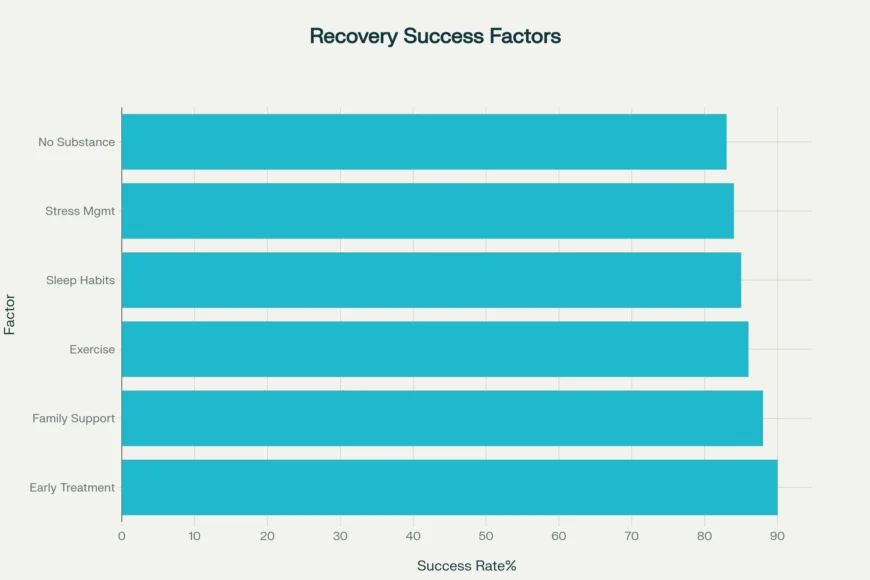
The skills learned during treatment for teen ED often benefit other areas of life as well. Stress management techniques, communication skills, and healthy lifestyle habits developed during erectile dysfunction treatment serve teens well in academic, social, and professional contexts throughout their lives.
Many teens who successfully overcome ED report that the experience taught them important lessons about vulnerability, seeking help, and not judging themselves harshly for perceived imperfections. These are valuable life skills that extend far beyond sexual function.
Taking Action: A Step-by-Step Approach
For teens currently struggling with ED, taking that first step toward getting help can feel overwhelming. Here’s a practical approach that many young men find helpful:
Step-by-Step Action Plan:
Step 1: Self-Assessment (Week 1)
- Acknowledge the problem without self-blame or shame
- Track contributing factors like stress, sleep, substance use, and relationship issues
- Identify trusted adults who could provide support (parents, counselors, doctors)
- Research local resources including teen health clinics and counseling services
Step 2: Seek Support (Week 2-3)
- Start conversations with a trusted adult about getting professional help
- Schedule medical consultation with a healthcare provider experienced with adolescents
- Consider counseling referral for anxiety, stress management, or relationship issues
- Involve supportive family members if comfortable doing so
Step 3: Begin Treatment (Week 4+)
- Attend all appointments consistently, even when progress feels slow
- Implement lifestyle changes including exercise, sleep improvement, and stress reduction
- Practice new coping skills learned in therapy sessions
- Track progress without putting pressure on perfect performance
Step 4: Maintain Recovery (Ongoing)
- Continue healthy habits even after symptoms improve
- Maintain open communication with healthcare providers and support system
- Address setbacks quickly without catastrophic thinking
- Help others when appropriate by sharing your recovery experience
Start by recognizing that experiencing ED doesn’t reflect on your worth, masculinity, or future potential. It’s a common, treatable condition that many teens face. Acknowledge that seeking help takes courage, not weakness.
Consider starting with a trusted adult – perhaps a parent, school counselor, or family doctor. If talking to parents feels too uncomfortable, many areas have teen health clinics that offer confidential services specifically designed for adolescents.
Keep a brief log of factors that might be contributing to your ED. This might include stress levels, sleep patterns, substance use, relationship issues, or physical symptoms. This information can be valuable for healthcare providers.
Focus on lifestyle factors you can control while seeking professional help. Regular exercise, adequate sleep, stress management, and healthy eating habits can all improve sexual function while also benefiting overall health.
Be patient with the process. Recovery from teen ED typically takes time, and there may be setbacks along the way. The goal isn’t perfect performance but rather developing a healthy, confident relationship with sexuality.
Most importantly, don’t suffer in silence. The shame and isolation that often accompany ED can be more damaging than the condition itself. There are healthcare providers, counselors, and support systems specifically designed to help teens navigate these challenges with dignity and confidentiality.
Key Takeaways
Yes, 15-year-olds can get erectile dysfunction. Research shows 8-15% of teenage males experience ED, but it’s usually temporary and highly treatable. Teen ED is primarily psychological (60-70% of cases), caused by anxiety, stress, or performance pressure rather than serious medical conditions.
Most cases resolve within 3-6 months through counseling, lifestyle changes like regular exercise and proper sleep, and stress management. Unlike adult ED, teenagers typically don’t need medications. The condition doesn’t predict future sexual problems – most teens recover completely and maintain normal adult sexual function. Professional help is confidential, and early treatment prevents long-term psychological impacts.
FAQs
Can erectile dysfunction really happen at 15?
Absolutely. Erectile dysfunction can and does occur in teenagers, with studies showing that 8-15% of teenage males experience some form of erectile difficulty. While it’s less common than in older men, teen ED is a real and significant health concern that deserves proper attention and treatment. The causes in teenagers are typically different from adult ED – primarily psychological rather than physical – but the impact on quality of life and self-esteem can be just as significant.
Does ED at 15 mean permanent problems?
No, experiencing ED at 15 definitely does not mean permanent problems. In fact, the opposite is true – teenage ED typically has an excellent prognosis with proper treatment. Since most teen ED cases are psychological in nature, they respond very well to counseling, stress management, and lifestyle changes. The vast majority of teens who receive appropriate support recover completely and go on to have normal adult sexual function. Early intervention often leads to better long-term outcomes and helps prevent the development of persistent anxiety around sexual performance.
Can stress or anxiety cause erection issues in teenagers?
Yes, stress and anxiety are actually the leading causes of erectile dysfunction in teenagers. The adolescent brain is still developing its stress management systems, making teens particularly vulnerable to anxiety-related sexual dysfunction. Performance anxiety, school pressure, family stress, social anxiety, and relationship concerns can all directly interfere with sexual function. The good news is that stress-related ED typically responds very well to anxiety management techniques, counseling, and lifestyle modifications that reduce overall stress levels.
Do teenagers need ED medication like Viagra?
In the vast majority of cases, no. ED medications like Viagra are rarely appropriate or necessary for teenagers. These medications were developed for older men with physical health problems and haven’t been adequately studied in adolescents. Since teen ED is usually psychological rather than physical, medication doesn’t address the root cause and may actually reinforce the belief that something is physically wrong. Counseling, lifestyle changes, stress management, and addressing underlying anxiety are typically much more effective approaches for teenage ED.
When should a 15-year-old see a doctor about ED?
A teenager should consider seeing a healthcare provider if erectile difficulties persist for more than 4-6 weeks, cause significant emotional distress, interfere with relationships or daily life, or are accompanied by other concerning symptoms like depression, anxiety, or changes in overall health. It’s also important to seek help if the ED is causing avoidance of romantic relationships or social withdrawal. Early intervention typically leads to better outcomes, so don’t wait for problems to resolve on their own if they’re causing distress.
How long does treatment for teenage ED usually take?
Most teenagers begin to see improvement within 2-4 weeks of starting comprehensive treatment, with significant progress typically occurring within 2-3 months. Complete recovery usually happens within 6-12 months, though this varies depending on individual circumstances and underlying causes. Psychological factors often improve more quickly than lifestyle-related factors, which require more time to show their full effects. The key is consistency with treatment recommendations and patience with the recovery process, as rushing or putting pressure on quick results can actually slow progress.
References
Board-Certified Urologist | Male Reproductive Specialist | Associate Professor of Urology
Dr. Matt Coward is an ABMS board-certified urologist with over 10 years of experience and specialized expertise in male reproductive health and infertility. He currently serves as the Director of Male Reproductive Medicine and Surgery at UNC Fertility in Raleigh, North Carolina, and is the Fellowship Director of the UNC Men’s Health Fellowship.